

Portal news
How to Build a Multi-Channel Content Management Process
A guide to building a content workflow from brief, planning, production, review, distribution to measurement; including data structure and a multi-channel operational checklist.
A guide to building a content workflow from brief, planning, production, review, distribution to measurement; including data structure and a multi-channel operational checklist.

Objectives and Campaign ID
Each piece of content must be linked to an objective, audience, campaign, and CTA. The Campaign ID connects content, assets, tracking, and results.
- Campaign ID
- Objective
- Audience
- Offer
- CTA
A Single Source of Truth
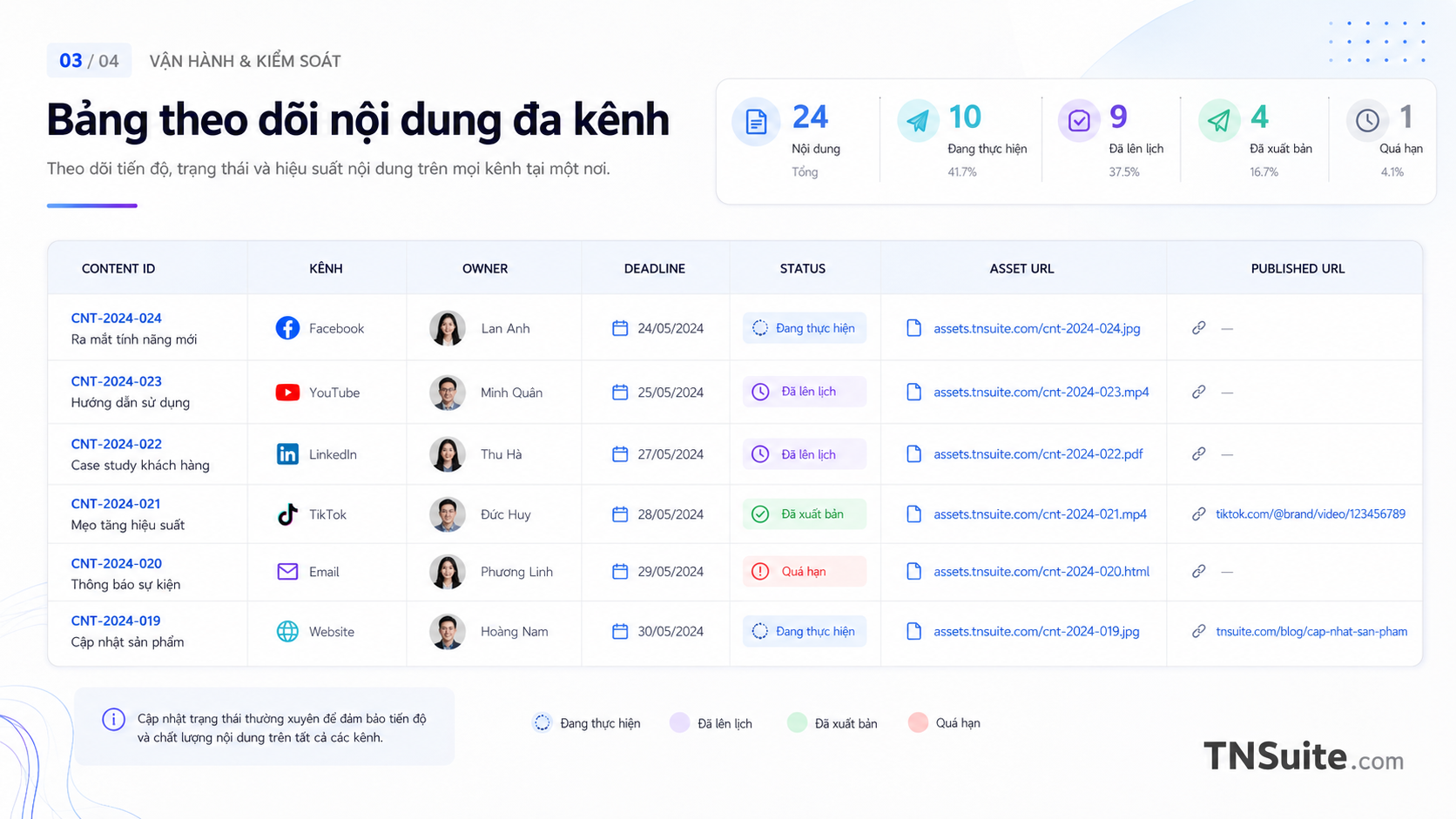
A single source of truth can start with a structured data table, as long as the owner, status, and assets are updated in one place.
- Content ID
- Channel
- Owner
- Deadline
- Status
- Asset URL
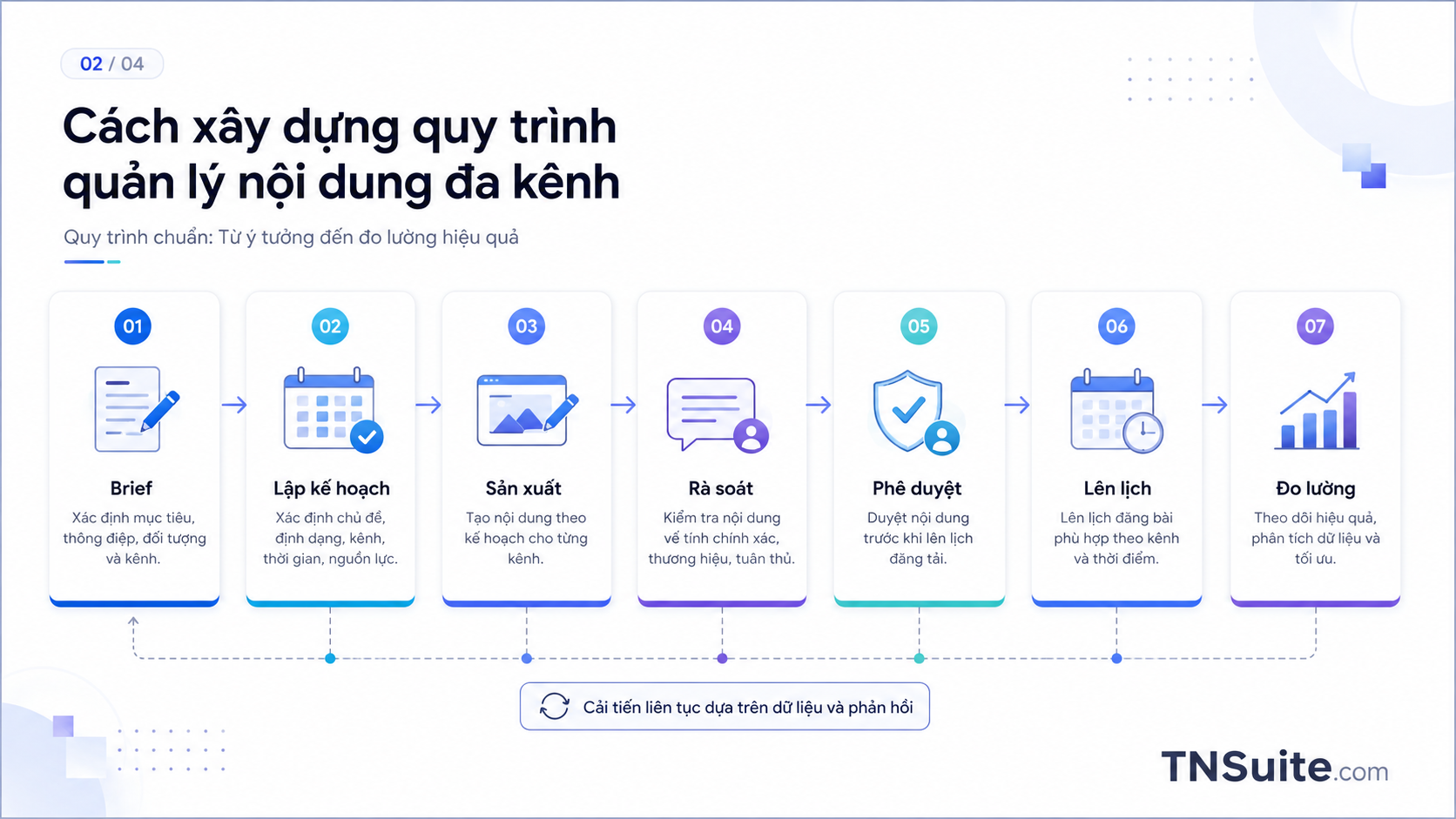
Workflow from Brief to Measurement
Use clearly defined conditional statuses: intake, planning, production, review, approval, scheduling, publishing, measurement.
- Brief accepted
- In production
- In review
- Approved
- Scheduled
- Published
Channel Variants
The core message can be shared, but the hook, format, image ratio, length, and CTA must adapt to each platform.
- Core message
- Channel hook
- Format adaptation
- CTA adaptation
Approval and Versioning
Separate producers, reviewers, and publishers when the risk is high; record revisions, timestamps, and reasons for changes.
- Reviewer
- Approver
- Revision
- Approval time
- Change note
UTM and Reporting
UTM needs to follow lowercase conventions, be consistent, and link to Content ID to identify which assets are effective.
- utm_source
- utm_medium
- utm_campaign
- utm_content
- Conversion

Practical Checklist
Frequently Asked Questions
Should I use one caption for all channels?
No; the opening style, length, format, and CTA need to be tailored for each channel.
How many statuses does a content calendar need?
About 6–8 clear statuses are usually easier to manage.
When is specialized software needed?
When the number of content, channels, people, and approvals exceeds the capacity of the current spreadsheet.
Conclusion
Multi-channel does not mean posting the same content in many places; it is a common process with suitable versions for each channel.
Start with a small scope, have an owner, set completion criteria, and have a way to measure. This approach helps turn knowledge into verifiable operational changes.
Next Steps
Check the last 20 contents: can you trace from the published article to the brief, asset, approver, and KPI?
View more expert articlesKeywords




Discussion
Your thoughts
There are no comments yet. Be the first to share your thoughts on this article.